Google Analytics has long become a digital autopilot. It is installed immediately after the site is launched, the dashboard is opened, graphs are viewed and a serious look is made, as if the situation is under control. Against this background, the short link service looks like an unnecessary element. Why another tool if GA "sees everything" anyway?
But there is a nuance here, because Google Analytics starts counting from the moment the user is already on the site. And short links work earlier - at the point of click. They do not compete, but are located on different parts of the route. And it is between the click and the page loading that the same blind spots most often appear, which in analytics look like "something went wrong, but it is not clear where."
What exactly does Google Analytics show?
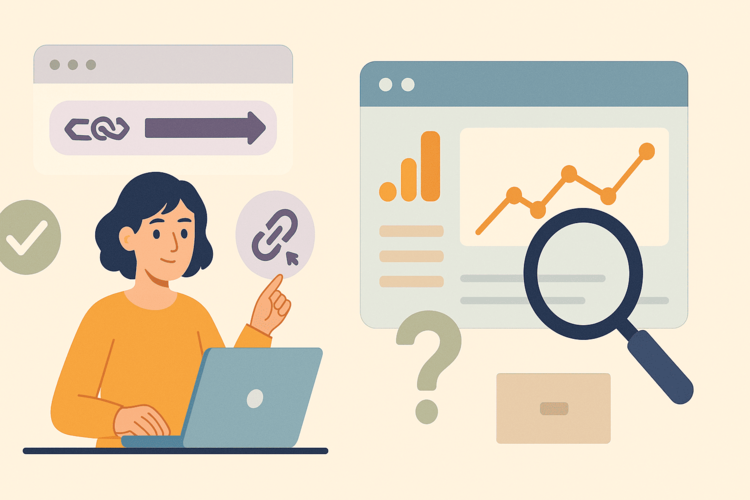
Google Analytics starts working from the moment the user is already on the site. And this is a key nuance that is often lost behind beautiful dashboards. GA perfectly shows the internal kitchen: how many people came, from which channels, how they behave on the pages, where they stop and at what moment they press the "buy" or "submit a request" button. For behavior analysis, this is, without exaggeration, one of the most powerful tools.
Google Analytics closes the entire post-transition stage, including allowing you to:
assess the quality of traffic from different channels;
see weaknesses in UX and content;
understand where exactly users "fall out" of the funnel;
measure the real contribution of pages to conversions.
It is thanks to this data that businesses optimize their sites, test hypotheses, and make advertising decisions. If a user has reached a site, GA provides an almost complete picture of their actions.
But there is a limit beyond which Google Analytics does not go. All this analytics appears after the fact of the transition. If the page did not open, took too long to load, gave an error or the user changed his mind at the click stage - for GA this event does not exist. In the reports you will see only the consequences: a drop in traffic, strange fluctuations in conversions or a "silent" degradation of the campaign for no apparent reason.
At such moments, it seems like there is data, but there are no answers. And this is not a mistake of analytics - it is simply its limit. Google Analytics honestly shows what is happening on the site, but it does not see everything that happened before it.
What Google Analytics doesn't see
In real life, a significant part of the events occur before the page has time to load. And this is where the area begins that Google Analytics fundamentally does not cover. Not because it is "bad", but because it is physically not present at this stage. For GA, the event begins from the moment the page loads, and everything that happened before remains behind the scenes.
Google Analytics misses a whole layer of important things:
whether the link was clicked if the page did not open;
Did the click come from a messenger, but the user closed the tab immediately?
whether the link leads to a current page, not an outdated or incorrect one;
whether there was a redirect, blocking, or technical failure;
whether the link itself is working at a specific point in time.
For businesses, this is a critical blind spot. In Google Analytics reports, you see the result – fewer sessions, worse campaign performance, falling conversions. But you don’t see the reason. And very often the problem is not in the advertising, not in the texts, and not in the design. It is simply hidden in a link that leads to the wrong place, breaks, or works unstable.
Without a tool that lives in front of the site and records the click itself, the situation looks like a puzzle with poor clues. The data is there, but it starts too late to explain exactly what went wrong.
Manage the link to go to the site
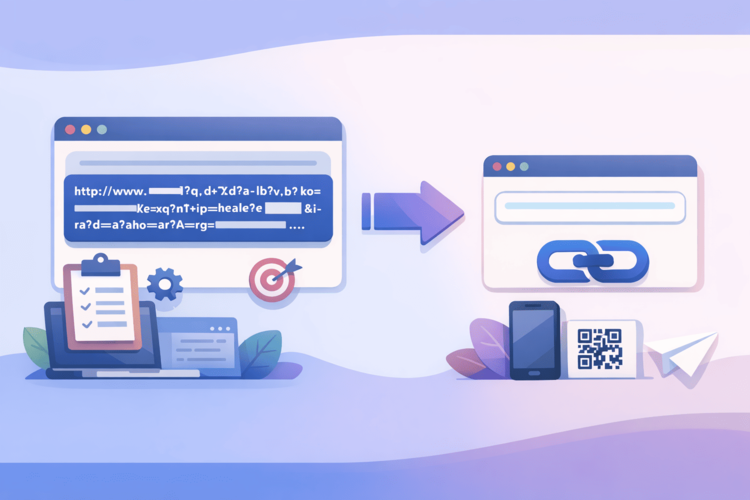
The short link service works on a different level than web analytics. It records not a session, but the fact of the click itself. That is, an event that occurs before the browser has loaded the page and Google Analytics has time to "wake up." This is a fundamental difference that is often underestimated.
When you work with short links, you start to see what is usually lost between the ad and the site. It becomes possible to control the user's journey at the entrance, rather than after the fact in the reports.
The short link service allows you to:
check whether the link is clicked at all, regardless of subsequent events;
see the source of the click, even if the page did not open;
control redirects and target relevance;
Identify problems before they affect analytics metrics.
In this sense, a short link becomes a checkpoint, not just a convenient URL. It shows whether the route to the site works, even before web analytics starts. That is why Surli looks here not as an alternative to Google Analytics, but as a monitoring and early diagnosis tool. It does not replace analytics, but complements it where GA physically does not have access.
Flexibility and quick changes without editing content
Another fundamental difference is post-publishing management. Google Analytics is powerless here: it doesn’t change or intervene, it just records what has already happened. If the user’s path turned out to be wrong, GA will honestly show it. But it will do so after the fact.
A short link works differently. It allows you to act not after the problem, but at a moment when the situation can still be corrected. The link ceases to be a static element and becomes a managed object.
Through a short link you can:
change the landing page without a new link;
redirect traffic to the current offer;
temporarily suspend or restrict access;
fix the error without editing the content.
In real-world scenarios, this is critical. A link may already have a life of its own: in an email sent yesterday; in a post that has been shared on social media; in a PDF, presentation, or even a QR code on printed materials. The content can no longer be changed, but the direction of the traffic can.
This is where short links stop being just "short URLs" and become a management tool. They allow you to react quickly, without rewriting content and without losing traffic, when every minute counts.
Short links as a complement to analytics
The biggest mistake is trying to choose between Google Analytics and short link services. In fact, they work in tandem, covering different parts of the same process. One tool is responsible for behavior on the site, the other for the path to it. And only together do they give a complete picture.
In practice, this chain looks like this:
a short link records the very fact of the click;
verifies that the user is going to the correct and relevant page;
Google Analytics analyzes behavior already within the site;
The business sees not individual metrics, but the holistic user journey.
In such a system, short links do not duplicate Google Analytics and do not try to "replace" it. They close its blind spots - everything that happens before the page loads. That is why Surli organically fits into this logic as a complement to analytics. It works where Google Analytics physically cannot work, and allows businesses to control the user's journey even before the numbers appear in the reports.
Why businesses use both tools
The reason businesses use both Google and services like Surli is quite pragmatic. In 2026, short links are no longer about “making the URL shorter.” They’re about control, responsiveness, and transparency of the user journey before analytics even start counting.
Google Analytics remains the foundation of web analytics. It provides a good answer to the question of what is happening on a site and why users behave in certain ways. But without link management, this picture will always be incomplete, because some of the events occur before the page loads.
That's why businesses don't choose between tools, but rather build a system. In such a system, analytics show the consequences, and short links provide the opportunity to influence the situation earlier - change the route, stop the problem, or redirect traffic before it becomes noticeable in the reports.