Short links are often perceived as something temporary. They made a link, used it in a campaign, and forgot about it. But the reality of 2026 is different. Links live longer than posts, longer than newsletters, and often longer than the products themselves. That is why the question "how long does a short link live" has long ceased to be theoretical.
In fact, a short URL can live for years. Or it can disappear in one day. The difference is not in the format of the link, but in how and where it is created.
What does the life of a short link really depend on?
The life of a short link is not determined by time. It is determined by control. Technically, any short link is a redirect. As long as the server that processes this redirect is up and running, the link is alive. As soon as the server or service disappears, the link ceases to exist.
In practice, it all depends on three factors:
The type of service on which the link was created.
The presence of an owner who is responsible for its support.
The ability to manage the link after creation.
If a short URL is created in a service where you don't have access to settings, can't see analytics, and can't change the target, its life is limited by someone else's solutions. This is where the difference between a "single-use link" and a "link as part of the infrastructure" begins.
Why do most people think that a short link “lives forever”?
The typical logic is simple: if a link opens today, it will open tomorrow. Short links look stable, do not change externally and do not warn about problems. This creates the illusion of durability.
In reality, a short URL always depends on the service that serves it. It does not "live on the Internet", but exists on a specific server according to specific rules. If the service changes its policy, operating model or simply disappears, the link disappears with it.
In 2026, this thinking error is still prevalent. Especially among those who use short links for content such as articles, presentations, documentation, and educational materials.
How the value of short links changes over time
At first, a short link seems like a small thing. It is created for a specific post, email, or campaign. But over time, the context changes. The link remains, but the meaning around it does not.
A few months later, the same link might:
get into reposts;
appear in selections;
be used as a reference;
move from marketing to navigation.
At this point, the short URL begins to take on a life of its own. And it becomes clear whether it was created "for once" or with an eye on the future. This is where the difference between a disposable tool and part of the infrastructure becomes apparent.
What technically happens when you click on a short link
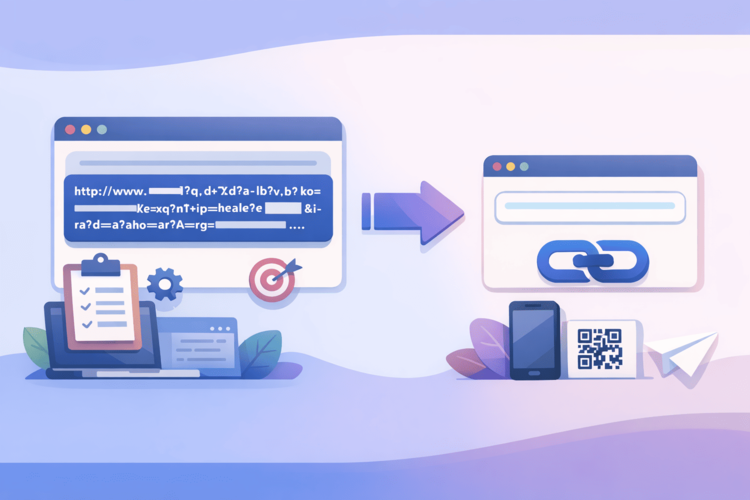
After clicking, the browser makes a standard HTTP request. DNS determines the IP address of the short link service server. The server processes the request and returns a redirect to the final address. At this stage, the user no longer controls anything. If the service does not respond, returns an error, or redirects to another page, the browser simply follows the instruction.
That's why short links without control are a point of risk. Not because of the format, but because of the lack of transparency and the possibility of intervention.
Free services vs managed platforms
Free link shortening services are here to stay. They're convenient, fast, and great for simple scenarios. But they all have one thing in common: you have no control over what happens to your link.
The free service can:
change the rules for storing links;
limit the lifespan;
add advertising;
to close or be sold.
And the user learns about it after the fact, when the old links stop working.
Managed platforms work differently. They see a short link not as a one-time action, but as an object that has a lifecycle. Such a link can:
check;
update;
analyze;
stop or change.
Surli in this context does not look like "another shortener", but as a service where the short link has an owner and a logic of existence. This is an important difference when we are not talking about a single post, but about years of work with traffic.
Why are “disposable” short links dangerous for long processes?
One-off solutions work well in short cycles. But when a business or media operates remotely, they start to accumulate risks.
Classic scenario:
the link was created in a free service;
used in several campaigns;
they forgot about him;
A year later he stopped working.
At this point, there is no quick fix. The link cannot be updated because it is not accessible. It cannot be replaced because it is scattered in dozens of places. This is a typical example of technical debt, but in the context of content and marketing. Managed services remove this risk not through features, but through predictability.
Different scenarios of the life of short links
Not all short links should live the same length of time. A campaign link – days or weeks. A link in an article – years. A link in a QR code – potentially indefinitely.
The problems begin when all these scenarios are implemented through the same unmanaged tool.
Why short links often outlive the content itself
Content has the property of becoming outdated. Pages are updated, products disappear, promotions end, and links continue to circulate. The user follows the link after a year or two. If it leads nowhere, it is a minus for trust. If it can be redirected to the current page, the link continues to work.
What happens to links when the service disappears?
When the service stops working, short links do not disappear by themselves. They either lead nowhere, or show an error, or redirect to a third-party page. For the user, this looks like negligence. This is especially painful for:
offline materials;
PDF files;
old publications;
educational resources.
It is no longer possible to replace such links. That is why the longevity of a short URL is not a matter of convenience, but of reputation.
How to ensure long-term link performance for businesses
Long-lasting links start with the right attitude towards them. For a business, a short URL is not a technical detail or a one-time tool, but an entry point that can last for years. Here are some simple rules to help make links long-lasting:
Create links where there is control and history.
Check active links periodically.
Avoid services without clear policies.
Document where and why the link is used.
Treat the short URL as part of the infrastructure.
Managed services allow you to not just create a link, but also work with it after publication, see analytics, change the target, and respond to errors or changes in context.
When access to settings and history is retained, the link ceases to be "disposable" and becomes an asset.
In this logic, Surli seems like a natural choice not because of its feature set, but because of its management approach. It removes the dependency on random changes, allows you to check the relevance of links and keep them in working condition.
Short links start to live longer when they are created in an environment with transparent rules, periodically checked, usage scenarios recorded, and perceived as part of the digital infrastructure, rather than consumables for a single campaign.
Short link as a long-term asset
In a content-saturated environment, the winner is not the one who creates more, but the one who does not lose what has already been created. In 2026, a short link is not just a path to a page, but literally saved traffic, saved trust, and saved context.
In the near future, short links will likely become even less visible to users and even more important to teams. They will remain in the background, but without them, many processes will simply cease to function stably.
And as long as content outlives campaigns and links outlive content, the issue of link longevity will remain relevant. Not as a technical detail, but as part of a strategy.