
Let's simulate a situation in which you buy a website. The seller says that the domain is eight years old, the traffic is stable, the history is clean. You pay money, and then it turns out that the domain changed hands twice, was under Google sanctions for a year, and was last used to send spam. All this was in the public domain, it's just that no one checked this information.
Or another situation. A letter arrives supposedly from your bank. The design is convincing, the text is competent, the logo is in place, but the domain in the address differs by only one letter from the official one. WHOIS knows exactly who registered this domain, when and where, and will tell you about it in a few seconds.
WHOIS has been around for as long as the commercial internet. It is a public database that stores information about every registered domain:
when did it appear?
through which registrar;
Who is it issued to?
when does registration end;
which DNS are connected.
The registrar is obliged to transfer this data to the database during registration, and anyone can make a request for free. It is important to understand one limitation right away. After the introduction of GDPR in 2018, the personal data of the owners is hidden in most cases. Instead of the name and phone number, you will see a privacy protection mark, but the registration dates, registrar, statuses and DNS remain open. In principle, this is enough to get the picture.
There are more than enough WHOIS services in 2026. We've selected five that really stand out from the rest — and explained what each is best for.
How did we choose the best WHOIS services?
It was evaluated according to four criteria:
Completeness of data. Does the service show all available fields or truncate the result to a minimum? Does it correctly handle domains of different zones — not only .com and .ua, but also more exotic TLDs. Some services work well with popular zones and give an empty result for everything else.
Speed and convenience. Is registration required for a basic query? Is there a limit on the number of checks? Is the result easy to read — structured output or a solid text block in which you need to search for the desired field?
APIs and integrations. For developers and analysts who need to check domains in bulk or integrate WHOIS into their own tool, having an API is a must these days. Services without an API are immediately eliminated for this scenario.
Historical data. Basic WHOIS shows the current status. But sometimes it is important to know how the data has changed over time - who registered the domain before, when the owner changed, which DNS were connected a year ago. Not all services have this, and where they do, they often charge a separate fee.
TOP 5 WHOIS services in 2026
1. WHOIS from HyperHost
HyperHost is a Ukrainian hosting company, and their WHOIS tool is available for free as part of a suite of online utilities for webmasters and website owners. It’s one of the most user-friendly on the list. And not because it’s overloaded with features, but because it covers the essential tasks without unnecessary steps.
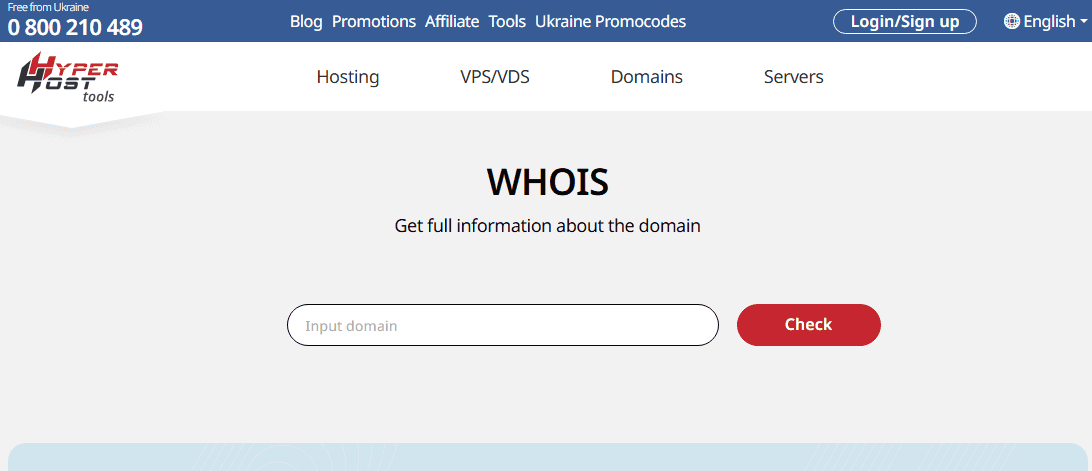
The interface is simple: enter the domain, get a structured result. No registration, no limits on the number of requests for basic use. Just open and check.
What sets the tool apart is its correct processing of Cyrillic domains and domains in the .ua zone. For Ukrainian users, this is not a detail, but a practical necessity, because some foreign services either give an error on .ua or return an incomplete result. HyperHost copes with this normally.
The result is displayed in a structured way — registration and expiration dates, registrar, DNS servers, domain status are highlighted separately and readable without having to parse a solid block of text. For someone checking a domain for the first time, this is important: it is immediately clear where everything is and what it means.
Well suited for website owners, SEO specialists, and anyone who needs to quickly check a domain without unnecessary steps and registrations. Especially relevant for working with Ukrainian domain zones.
2. Whois.domaintools.com
DomainTools is one of the oldest and most comprehensive WHOIS services in the world. The free version shows the standard data: registrar, dates, DNS, status. But the real value of DomainTools is in its paid features. Here is a complete history of WHOIS records:
who registered the domain previously;
when the owners changed;
what contact details were provided at different stages.
There is a reverse search that allows you to find all domains registered to a specific email address or organization. There is change monitoring, thanks to which the service notifies you when data changes on the monitored domain.
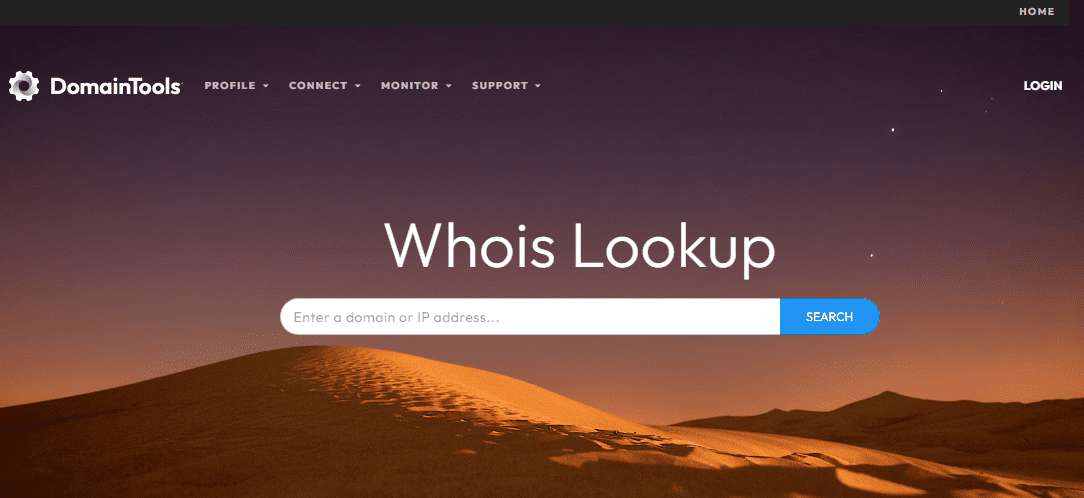
DomainTools is unmatched by journalists, cybersecurity researchers, lawyers, and companies that need to investigate their digital footprint. But it’s a tool with a price tag and a level of sophistication to match. For systematic domain work, it’s indispensable, but for a one-time check, it’s better to choose something more affordable.
3. ICANN Lookup
ICANN regulates the domain name system on a global scale. Their official WHOIS tool is available for free and without registration. Its main advantage is the authority of the source. The data is taken directly from the registries, without intermediaries and without synchronization delays. If you need accurate and up-to-date information and it is important that it is from the original source, ICANN Lookup provides it.
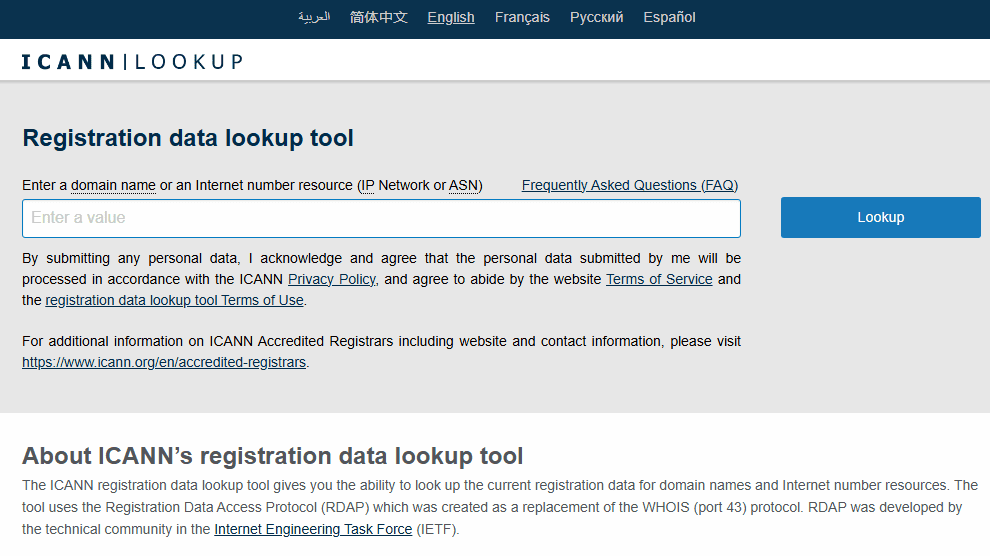
But there is one important nuance. The tool strictly adheres to GDPR and similar regulations, so hidden data is hidden here more consistently than in commercial services, which sometimes show a little more. The interface is minimalistic to the point of asceticism, so there is no place for any unnecessary functions, only the query results.
For technical specialists and anyone who values data authority more than interface convenience. For a one-time check of official data before an important decision, this is a really good choice. However, for everyday work with a large number of domains, it can be a bit inconvenient.
4. Whois.com
Whois.com is one of the most well-known public WHOIS services, which has been around for a long time and has gathered a stable audience over this time. The interface is familiar to anyone who has ever googled "whois domain."
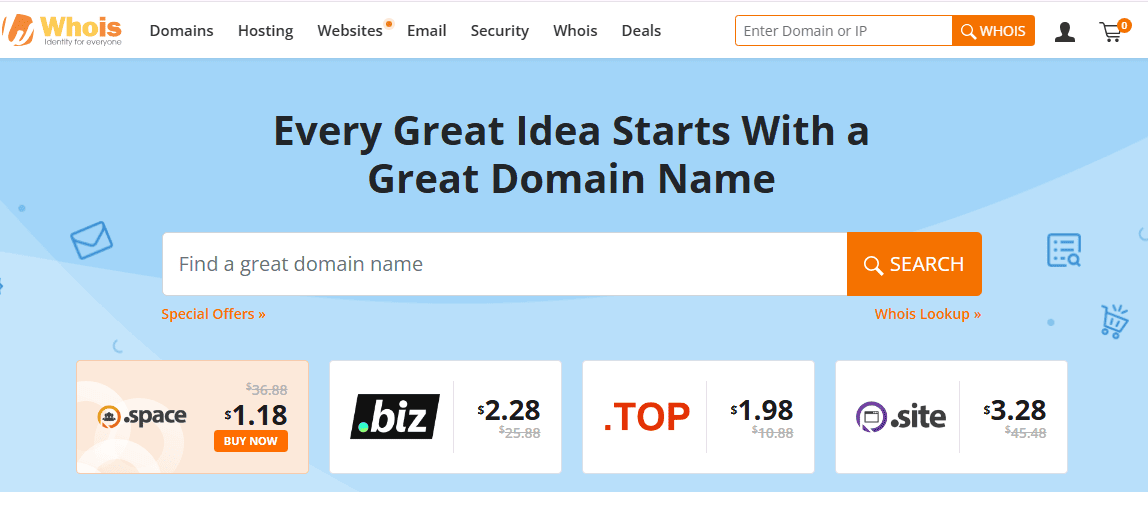
The basic check is free and does not require registration. The result is displayed in a standard format, covering most popular TLDs. There are additional tools such as:
checking domain availability;
search for similar names;
basic information about IP.
There is no significant distinguishing factor compared to other services on the list. This is a solid middle-of-the-roader that does its job without surprises. Advertising is present, but it does not interfere with work critically. It is good for a one-time check, but for regular work it is better to have something with a cleaner interface or API at hand.
The most logical choice for those who are already used to this service and see no reason to look for an alternative for basic tasks.
5. GoDaddy WHOIS
GoDaddy is the largest domain registrar in the world, and their WHOIS tool is available for free as part of the service's overall infrastructure. This is both an advantage and a drawback.
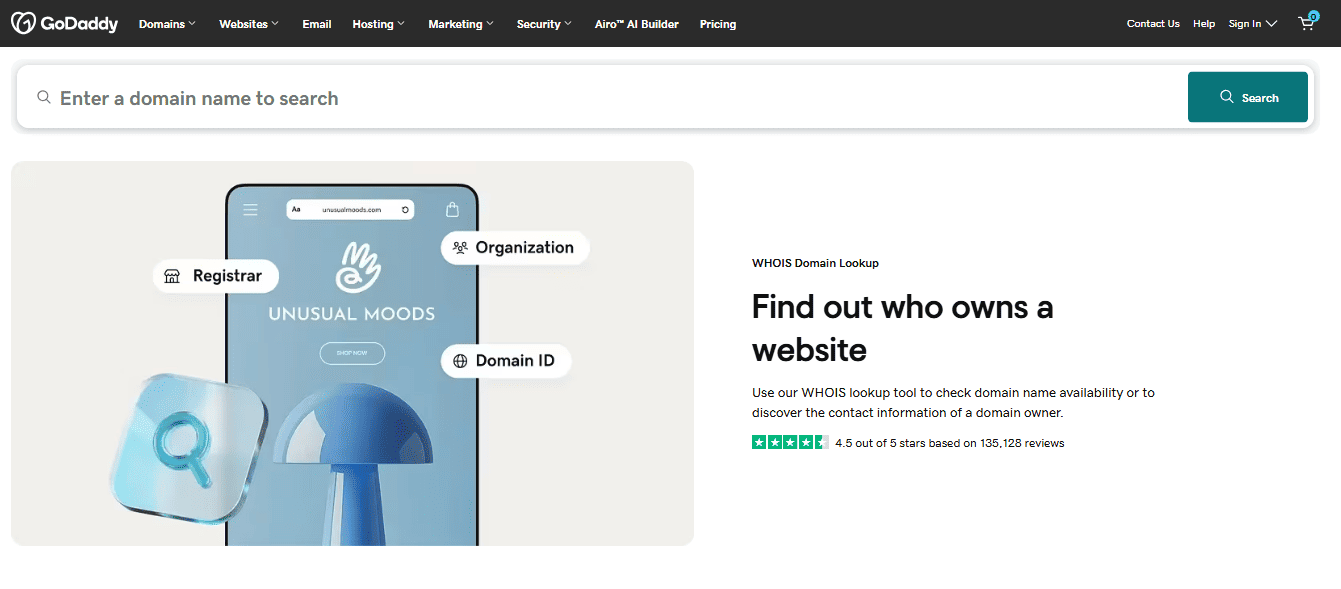
The advantage is that for popular domain zones, especially .com, .net, .org, GoDaddy has direct access to registry data and the results come quickly and completely. The interface is convenient, the result is structured, there is a direct link to register or transfer the domain if it is free.
The nuance is that GoDaddy is interested in you not just checking the domain, but buying or transferring it to them. This is felt in the way the interface is built: each result is accompanied by offers to buy something. For checking, this does not interfere, but it is worth remembering the commercial context.
A good choice if you are checking a domain with an eye on a possible registration or transfer and want to see availability and cost right away. As a neutral research tool, it is less convenient due to the commercial noise surrounding the results.
Who to elect in 2026
If you need a quick check without registration, and especially if you work with Ukrainian domains, WHOIS from HyperHost solves most of the problems. Structured result, correct processing of .ua, nothing superfluous.
If you need historical data, reverse lookups, and full domain research, DomainTools is a better choice. It's a different level of tool and a different price point, but for serious analytical work, there aren't many alternatives.
If the authority of the original source and the accuracy of the data are more important than convenience, take a look at ICANN Lookup. It doesn't get more official than that.
If you're checking out a domain with the intention of registering it and want to see the cost and availability right away, GoDaddy will do it in one window, albeit with commercial support.
If you just need a reliable, familiar tool without any complaints, Whois.com will do a great job.
A domain is not just an address, but literally a reputation, age, history, and signal to search engines and to people who land on your site. Checking it out before paying, trusting, or publishing is simply a smart habit that saves you from unpleasant surprises after the decision has been made.